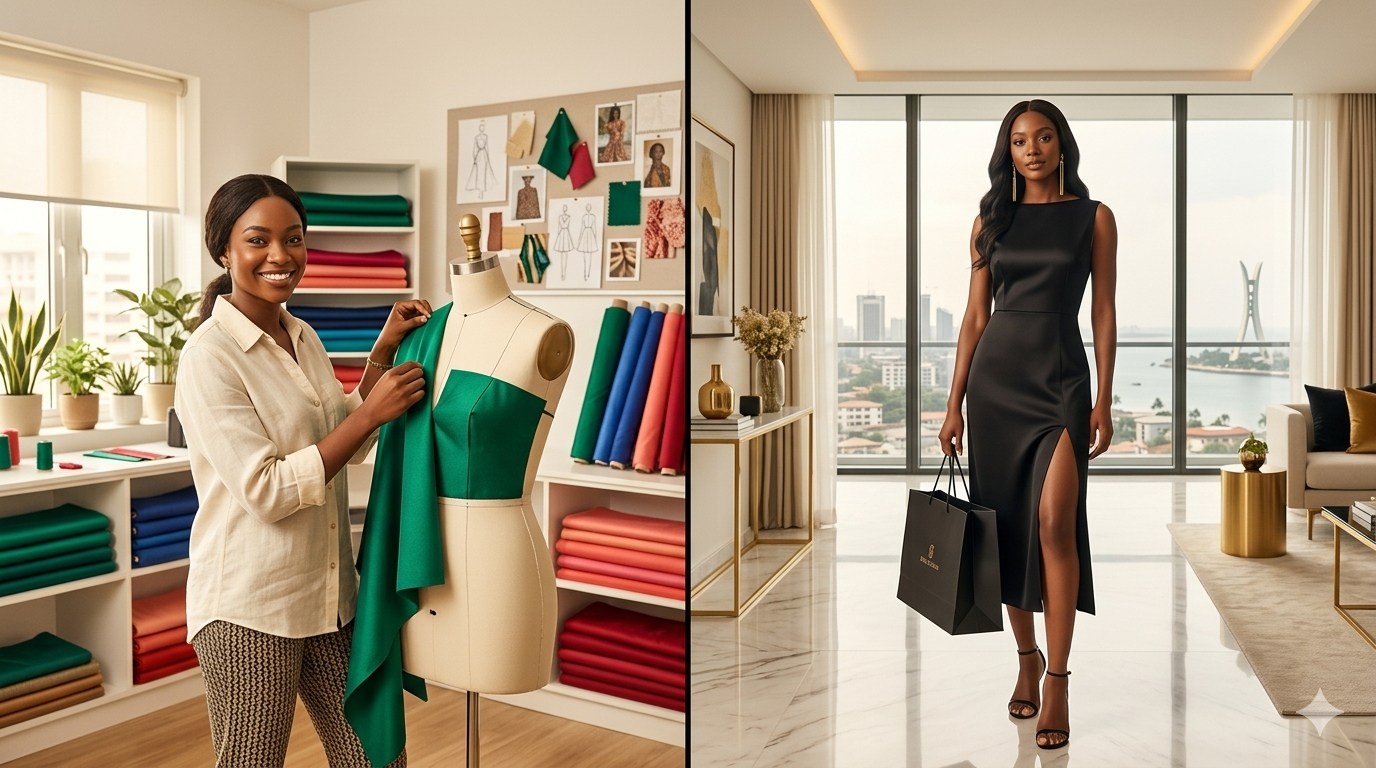
The debate keeps coming up at every party, in every group chat, and definitely on every Instagram comment section. Should you go to a tailor for a bespoke dress or buy ready to wear from a designer?
Your aunt insists that only bespoke dresses fit properly. Your friend swears by her tailor. But then you see those stunning ready made pieces online and wonder if maybe there’s a better way.
Here’s what nobody tells you: both options have their place. The question isn’t which one is universally better. It’s which one makes more sense for your life, your schedule, and your actual needs. Let’s break down what you really need to know.
The Bespoke Dream vs Reality
Bespoke dresses sound amazing in theory. Something made specifically for your measurements, in exactly the fabric you want, with all your preferred details. Perfect, right?
Except the reality is often frustrating. You find inspiration photos online. You explain what you want to your tailor. You might even bring fabric yourself. Then you wait, usually much longer than promised.
When the dress finally arrives, there’s a 50/50 chance it actually fits properly. Sometimes the tailor nailed it. Other times you’re doing emergency alterations two days before the event. The inconsistency is exhausting.
And let’s talk about timing. Nigerian tailors operate on “tailor time,” which bears little resemblance to actual time. Two weeks means three weeks minimum. One month might stretch to six weeks. If you have an event coming up, that uncertainty creates serious stress.
The cost surprises many women too. A good tailor isn’t cheap, and once you add quality fabric, a complex design, and potential rush fees, you’re often paying as much as or more than ready to wear designer pieces.
Why Ready to Wear Is Having Its Moment
Smart Nigerian women are increasingly choosing ready to wear dresses for reasons that go beyond just convenience.
First, you know exactly what you’re getting. No surprises, no disappointments, no last-minute panic. What you see online is what arrives at your door. That certainty alone is worth something.
The timing is predictable. Order today, receive within days. No checking in with tailors, no excuses about fabric delays, no stress about whether your dress will be ready for the event. Just reliable, predictable delivery.
Quality stays consistent too. When you buy from established ready to wear brands like Style Envie, every piece meets the same standards. The stitching is clean, the fit is tested, the fabric is quality. You’re not gambling on whether your tailor had a good day.
Returns and exchanges actually work. If something doesn’t fit right, you can exchange it. Try doing that with a bespoke piece your tailor already made. That money is gone whether the dress works or not.
The Fit Question Everyone Asks
“But bespoke fits better because it’s made for my body.” This is the argument people always make, and it’s not entirely wrong. Custom measurements should theoretically create a better fit.
Should being the key word there.
In reality, many tailors take measurements once, often quickly, and don’t account for the complexities of how bodies actually work. They might get your bust measurement right but miss how your shoulders slope or where your waist actually sits.
Good ready to wear brands study body types extensively. They create pieces that fit a range of bodies well because they’ve tested their patterns on real women, not just worked from a single set of measurements.
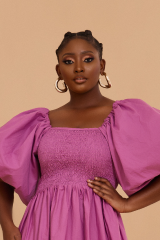
Take the Molly Dress in Purple or Molly Dress in Black for example. These pieces work on different body types because the design accounts for how women are actually shaped. The cut flatters without requiring custom measurements.
Plus, ready to wear pieces can be altered. If a dress fits well but needs minor adjustments, any competent tailor can handle that. You get the consistency of ready to wear with the customization of alterations when needed.
Time: The Resource You Can’t Get Back
Let’s be honest about what dealing with tailors actually costs. Not just money, but time and mental energy.
There’s the initial meeting to discuss what you want. The follow-up to check on progress. The calls when the promised date passes. The eventual fitting, which might reveal problems that require another week of work. The second fitting. Sometimes a third.
All of this for one dress.
Now imagine you need outfits for multiple events. The time investment becomes ridiculous. You’re essentially taking on a part-time job managing your tailor relationships.
Ready to wear eliminates all of that. Browse online when convenient. Order what you like. Done. The time savings alone justifies the choice for many busy women.
According to research on consumer behavior, modern shoppers increasingly value convenience and time efficiency over traditional shopping methods. Nigerian women are no exception to this global trend.
The Quality Conversation
Some people assume ready to wear means lower quality. This might have been true twenty years ago, but the Nigerian fashion industry has evolved dramatically.
Contemporary ready to wear brands invest heavily in quality. They have to. Their entire business model depends on consistency. Every piece needs to meet standards or customers won’t return.
Bespoke quality varies wildly based on your specific tailor. An experienced, skilled tailor produces beautiful work. But finding that person requires trial and error, and their quality might still fluctuate based on how busy they are or what’s happening in their life.
The Bukky Dress shows what quality ready to wear looks like. The construction is clean. The fabric is substantial. The details are thoughtfully executed. This isn’t mass-market fast fashion. It’s designed clothing produced to consistent standards.
Look at pieces like The Stripe Peplum Ensemble. The craftsmanship rivals anything a good tailor would produce, but you get it with predictable timing and guaranteed quality.
Cost Analysis: What You’re Really Paying For
Let’s break down actual costs because the comparison isn’t as simple as looking at price tags.
A bespoke dress might cost ₦50,000 for a decent tailor, plus ₦15,000-30,000 for quality fabric, plus potential rush fees, transport to multiple fittings, and your own time. Total real cost: ₦70,000-90,000 plus hours of your time.
A ready to wear dress from Style Envie ranges from ₦40,000 to ₦120,000. The Melisa Dress at ₦40,000 costs less than most bespoke options when you factor in all expenses. Higher-end pieces like the Como 2.0 at ₦107,500 compete directly with bespoke pricing.
But here’s what changes the calculation: reliability and reusability. A well-made ready to wear dress lasts for years and can be worn to multiple events. A bespoke piece might be beautiful but if the fit isn’t quite right, it sits in your closet unworn.
The Weekend Set in Green or Weekend Set in Mustard at ₦91,375 offers versatility. Wear the pieces together or separately, dress them up or down. That’s serious value.
Style Evolution and Trend Navigation
Fashion trends move faster than ever thanks to social media. What looked amazing three months ago might already feel dated.
This is where ready to wear brands excel. They stay current with trends while maintaining wearable designs. You get contemporary style without committing to something so trendy it’ll look ridiculous next year.
Bespoke dresses often copy whatever you bring in the inspiration photo. If that photo shows a very trendy 2023 look, your dress will look dated by 2025. Good ready to wear brands filter trends through timeless design principles.
Style Envie’s approach focuses on creating “vibrant, in-demand, and stylish designs” while producing “timeless pieces because trends come and go but true style should be enduring,” according to their about page. This philosophy shows in pieces that work now and next year.
The Versatility Factor
Ready to wear collections offer variety that’s hard to match with bespoke. Instead of describing what you want and hoping your tailor executes it correctly, you can browse actual completed pieces.
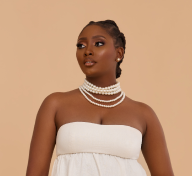
Want something bold? Check the Carrie Dress. Prefer elegant simplicity? The Pearl Dress in Black might be perfect. Looking for playful sophistication? Consider The Bow Dress in Lilac and Purple.
This variety means you can own multiple pieces for different occasions without repeatedly explaining your vision to a tailor. Each piece serves a different purpose in your wardrobe.
When Bespoke Actually Makes Sense
To be fair, bespoke isn’t wrong for everyone in every situation. There are times when custom makes sense.
If you have a very specific vision that doesn’t exist in ready to wear, bespoke might be your only option. If you’re part of a wedding party with mandatory aso-ebi fabric, you’ll need a tailor. If your body proportions are extremely unusual, custom measurements might be necessary.
The key is being honest about whether those situations actually apply to you. Most women fit well into ready to wear sizes, especially when minor alterations are an option.
The Confidence Element
Here’s something people don’t talk about enough: how you feel in your clothes matters enormously.
A beautiful dress that you stressed over for weeks, worried wouldn’t be ready, and aren’t quite sure fits right? That stress shows. You can’t fully relax and enjoy yourself.
A ready to wear piece that arrived exactly as expected, fits well, and required zero drama? You feel confident immediately. That confidence changes how you carry yourself at events.
The Isabel Dress or Allura Corset Balloon Dress delivers that confidence because there’s no uncertainty. What you ordered is what you got, and it looks exactly as amazing as you expected.
Environmental and Ethical Considerations
The fashion industry’s environmental impact is finally getting serious attention. How do ready to wear and bespoke compare on sustainability?
Bespoke uses exactly the fabric needed for one piece, which sounds efficient. But transportation to multiple fittings, potential waste from mistakes, and the fact that poorly fitting pieces often go unworn creates hidden waste.
Quality ready to wear brands optimize production to minimize waste. They create pieces meant to last for years, not one season. The Trish Dress Mummy & Me at ₦55,000 is designed to be worn repeatedly, making it more sustainable than cheaper alternatives you’d replace constantly.
According to Elle’s sustainability guide, investing in fewer, higher-quality pieces creates less environmental impact than constantly buying and discarding cheaper items, regardless of whether those items are bespoke or ready to wear.
The Social Media Reality
Instagram and TikTok have changed how we think about our wardrobes. You want outfits that photograph well and can be styled multiple ways.
Ready to wear brands design with this in mind. They understand that their pieces will be photographed and shared. Colors are chosen to work well on camera. Silhouettes are tested to look good from multiple angles.
Many bespoke dresses look beautiful in person but photograph strangely because tailors don’t necessarily consider how designs translate to photos.
Building a Functional Wardrobe
A wardrobe of ready to wear pieces offers flexibility that’s hard to achieve with bespoke. You can mix and match, dress pieces up or down, and create multiple looks from fewer items.
The Embroidery Pants at ₦75,250, exemplifies this. Pair them with the matching top for formal events or with a simple blouse for something more casual. One piece, multiple uses.
Compare that to a bespoke dress made for a specific event. Beautiful, but limited in how you can wear it.
Making Your Decision
So which should you choose? Here’s a practical framework.
Choose ready to wear when you want reliability, value your time, need consistent quality, want multiple options to browse, or prefer the security of knowing exactly what you’re getting.
Choose bespoke when you have a very specific vision, need to use particular fabric, have unusual proportions that ready to wear doesn’t accommodate, or have a trusted tailor whose work you love.
For most women, most of the time? Ready to wear makes more sense. The convenience, consistency, and quality of contemporary Nigerian ready to wear brands have reached a point where the traditional advantages of bespoke no longer outweigh the hassles.
The Future of Nigerian Fashion
The Nigerian fashion industry is maturing. Consumers are getting more sophisticated. Quality expectations are rising. Ready to wear brands are responding with better designs, better construction, and better service.
This doesn’t mean bespoke will disappear. But it does mean that ready to wear is no longer a compromise. It’s often the smarter choice.
Brands like Style Envie represent where Nigerian fashion is heading. Professional, reliable, quality-focused, and designed for real women’s real lives.
Your Next Steps
If you’re curious about making the switch to ready to wear, start with one piece. Choose something for an upcoming event and experience the difference firsthand.
Browse the Style Envie collection and see what speaks to you. Order something you love. Experience the relief of a predictable, stress-free process.
You might still use tailors sometimes. But you’ll probably find that ready to wear becomes your default for most occasions. Because once you experience how much easier and more reliable it is, going back to the uncertainty of bespoke feels unnecessary.
Smart Nigerian women aren’t choosing ready to wear because they’ve given up on quality or style. They’re choosing it because they value their time, appreciate consistency, and recognize that modern ready to wear delivers everything bespoke promises, with far less hassle.
The question isn’t whether ready to wear can compete with bespoke anymore. The question is why you’d choose the complicated option when the simple one works so well.